
Horse care is a big responsibility and not everyone is equipped to take on the task. In this post, we are going to cover the basics of horse care for beginners. We will discuss things like how to groom your horse, how to feed your horse, how to ride your horse, and how to care for your horse when things go wrong. By the end of this post, you will have all the information you need to take care of your horse properly, whether you are a beginner or an experienced rider. So, without further ado, let’s get started!
1. Before you start horse care
Before you start horse care, it is important to have a basic understanding of horse anatomy and physiology. Knowing how horses work and how to take care of them will make the process much easier.
Horses are mammals and as such, they are warm-blooded animals that require a habitat that includes a 12-hour light/dark cycle and a stable preferrably temperature range of 15-59F degrees depending on the coat. They are also able to regulate their own body temperature and are able to get along with other animals and pets.
The hoof is one of the primary sensory organ of the horse. It is made up of four parts: the coronary band, the hoof wall, the frog, and the coffin. The coffin is the part of the hoof that touches the ground.
There are several things you need to know before you start horse care for your horse:
– Horses require a lot of exercise and should be allowed to run or gallop on a regular basis.
– Provide your horse with a clean, dry shelter that is large enough for him to stand, lie down, and turn around in.
– Provide your horse with hay, straw, or a mixture of both.
– If your horse is kept in a stall, make sure he has a straw bed, a water bucket, and a shelter from the weather.
– Horses should not be fed grain or hay that has been treated with pesticides or herbicides.
2. Feeding your horse
When it comes to horse care, one of the most important things you can do is feed your horse. Feeding your horse the right amount of food at the right time is essential for their overall health and well-being.
It’s also important to keep in mind that your horse needs water. Make sure to give them enough water during the day and at night. If your horse is thirsty, they will start to show signs of being unwell, such as being restless, eating less, and being tired. If your horse is not drinking enough when you supplied water, check
It’s important to note that when nights are under 32F, water in buckets will freeze. To counter that, leave a hose dripping into the water bucket overnight. A drop every 5-10 seconds will create motion that prevents water from freezing.
3. Handling your horse
Horses are amazing animals and if taken care of properly, they can provide years of enjoyment. However, just like any other animal, horses can be difficult to handle at first. In this section, we’ll cover some basics you need to know before you take your horse out for a ride. When you first get your horse, it’s important to get him accustomed to you and your surroundings. This can be done by slowly introducing him to new people, places, and things. Once he’s comfortable with you, you can start introducing him to the horse trailer and other items that typically raise horse’s anxiety. Pay attention to the eyes, neck and ears to understand the level of anxiety.
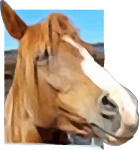
Rose hears something out in a distance.
It’s not the point where she will take off any second, but there is something she is assessing for danger. Look at her ears, eyes and slightly raised head pointing in the same direction.
When you’re bringing your horse into the trailer, be sure to be gentle and avoid jarring him. You want to make the experience as pleasant as you can. Once you have him in the trailer, don’t rush to drive off to the trails and back him up a couple times to let him know that he is not trapped.
To further desensitize your horse, take him around the property. Be sure to keep an eye on him so he doesn’t get too excited and start bucking or rearing. For this exercise, I recommend using a rope halter, since it provides better control over your horse’s head.
If you do encounter this or any high alert state, hold his head towards you to move his rear away from you, lead him back to where you were and attempt the same experience again with slower pace. It’s important to gage your sorroundings ahead of time, so you and your horse don’t run into obstacles, sharp edges, or other people while working out this alert state.
4. Trimming and brushing your horse
Horses require a lot of care, especially when it comes to their coat, mane and tail. In warm conditions, you’ll want to trim them every few months and wash with shampoo every couple weeks. Brush the mane and tail them at least once a week.
Here are some tips on how to clip your horses coat, but be careful to do so if the cold weather still lingers around:
0. Test if your horse is calm with the vibration of the clipper all around their body before starting to trim.
1. Start by getting a good pair of horse clippers. You can find them at most tack stores or online. Get 1/4 – 1/2 in extension depending on how long you want the coat to be.
2. Make sure the clippers are sharp by checking the blade with a piece of paper.
3. Gently clip against the coat direction.
4. If your horse has a long coat that’s difficult to clip, try spraying and brushing first
Keeping your horse healthy is essential for both your horse and yourself. Here are a few basics you should keep in mind:
– Feed your horse a balanced diet that includes hay, oats, and fresh vegetables. If your horse is eating a lot of grains, it will create problems such as bloat and GI issues.
– Brush your horse every day and remove any mud, feces, or other dirt.
– Get your horse vaccinated against common diseases, such as distemper, tetanus, and rabies.
– Make sure your horse has a comfortable stall and plenty of fresh water and straw.
– Take care of your horse’s hooves and have the ferrier service every 8 to 12 weeks.
6. Saddling your horse
Saddling your horse correctly is key to a smooth ride. It’s also very important to get the saddle fit for your horse to ensure a safe and comfortable ride. There are a few factors you should take into account when saddling your horse. The first is your horse’s size. Make sure to get a saddle that is sized appropriately for your horse. Second is your horse’s girth. The girth is the band around your horse’s body and connects to the saddle. Third is your horse’s temperament. If your horse is skittish or fractious, you may want to choose a saddle that is soft and spreads pressure widely on their back. Finally, make sure to read the saddle’s instructions carefully before saddling your horse.
7. More horse care tips for beginners
If you’re new to horse care, there are a few basics you’ll want to be aware of. For one, never leave your horse tied up alone in a barn or stable. Always have someone with you when you’re outside of the horse’s stall, and always be prepared to give first aid in the event of an injury.
Another important thing to remember is to brush your horse regularly. This will help remove any dirt, dust, or other material that may be attaching to the coat. Brush the horse’s mane, tail, and hindquarters. You can also use a horse brush or a sponge to clean the horse’s face and ears.
And finally, refill the water for your horse regularly. A good rule of thumb is to give your horse at least one gallon of water per day. If your horse is working hard, give them two gallons of water per day.
We hope you enjoyed our beginner’s guide to horse care. Horses are a huge part of many people’s lives, and it’s important to know the basics about caring for them. In this post, we outlined the most important things you need to know about horse care, from feeding and watering them to grooming and training. We know that this guide was just a starting point, so please feel free to ask any questions that you may have. Thank you for reading and we hope that you will continue to follow our blog and social media for more horse-related content!